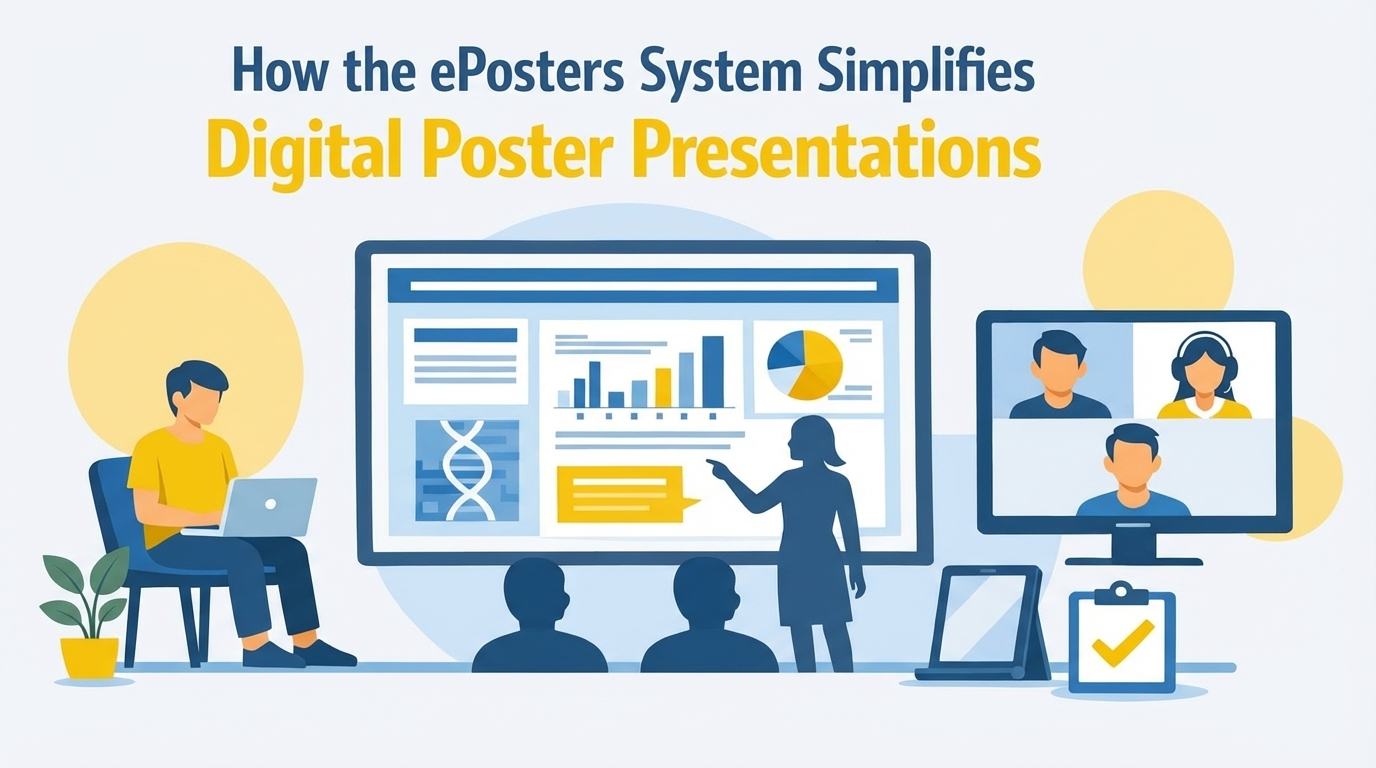
At events and conferences, poster presentations have always been one of the most practical ways to share research, project outcomes, case studies, and business ideas, but anyone who has spent time around traditional printed posters already knows the common problems. Posters can be expensive to print, awkward to transport, easy to damage, difficult to update at the last minute, and limiting when you want to show more than a single static design. A digital poster system changes that experience completely, and that is where the ePosters system offers a much simpler option for organisers, presenters, and venues that want a cleaner and more flexible way to display content.
If you are looking at eposters.com.au and wondering how the system works in a real event setting, this guide walks through the easiest way to use it. The goal is not to overcomplicate the process, because one of the biggest strengths of the ePosters system is that it removes a lot of the friction that usually comes with poster sessions. Instead of dealing with print deadlines, wall mounting, damaged corners, and limited viewing options, presenters showcase their content digitally and attendees can browse posters in a much more organised and engaging format.
Why digital posters make more sense at modern events
Conferences have changed a lot over the years, especially as organisers now need to think about attendee experience, venue efficiency, sustainability, and the ability to deliver information in a way that feels current. Printed posters still have a place in some settings, but for many events they create unnecessary workload. There is often a rush to meet printing deadlines, posters arrive in tubes, presenters carry them across airports and hotels, and then a final version might already be outdated by the time it reaches the display board. That entire process can feel old fashioned when digital systems now make updates and presentations far easier.
The ePosters system helps solve these issues by allowing poster content to be displayed on interactive screens rather than printed boards. This means presenters can prepare their work digitally, submit it online, and have it displayed professionally during the event without needing a large physical printout. It also means attendees can view posters in a format that is easier to navigate, easier to read, and often much more engaging, especially when the poster includes multiple pages, zoomed sections, embedded media, or supplementary information.
For organisers, this creates a much neater poster area and a more manageable workflow. Instead of planning rows of poster boards and dealing with setup and removal logistics, there is a centralised system that supports digital delivery. That reduction in physical handling can save time, reduce clutter, and create a more polished impression for sponsors, delegates, and speakers.
How the ePosters system works in a simple way
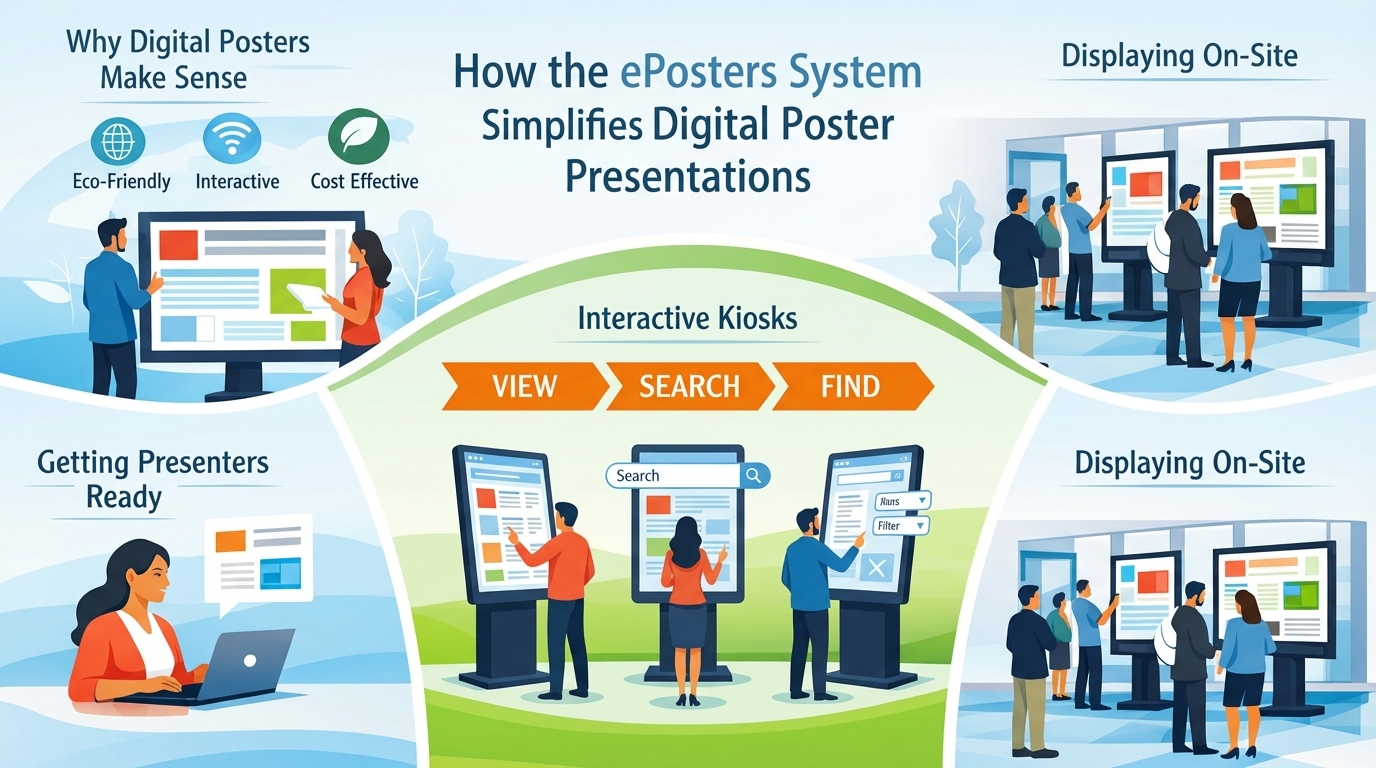
The easiest way to think about our ePosters system is to break it into three stages, which are content preparation, content distribution, and content display. Once you understand those three parts, the whole process becomes much easier to visualise.
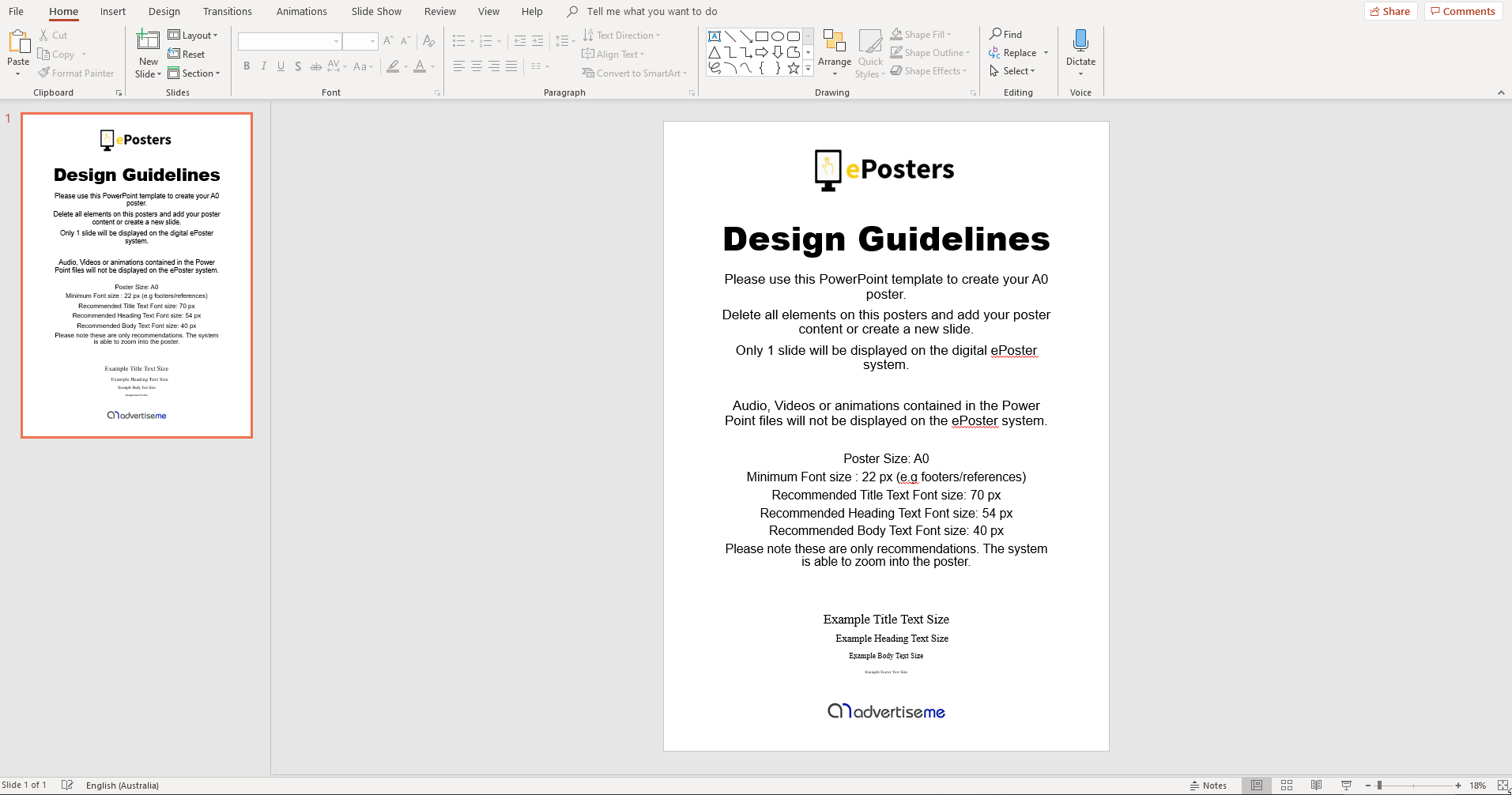
First, the presenter creates their digital poster. This may be based on an existing print poster design, but in many cases it is even better to design specifically for screen viewing. We provide our clients with a guideline on how the ePosters should be presented and in what format. Now, a digital display gives more flexibility because text can be optimised for on screen readability, images can be sharper, and layouts can be adapted for portrait or landscape displays depending on the event setup. Instead of being locked into a static large sheet, the content can be presented in a way that feels more structured and more comfortable to browse.
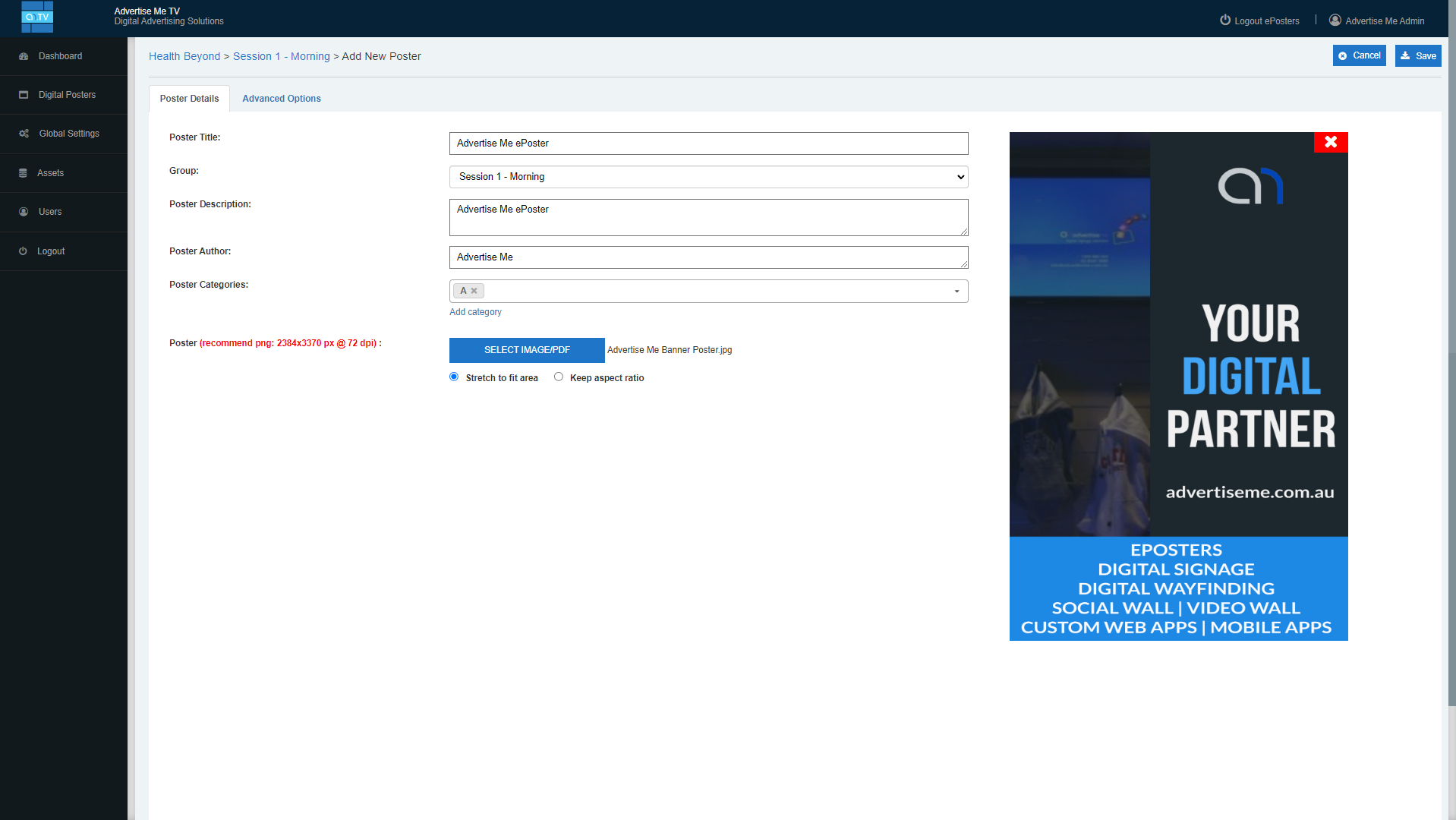
Second, the presenter sends the digital poster to the event organise and once we receive the content, we test to make sure it displays correctly on the screen. This step is important because it centralises content collection before the event. That makes life easier for event administrators, especially when dealing with a large conference program involving dozens or even hundreds of posters.
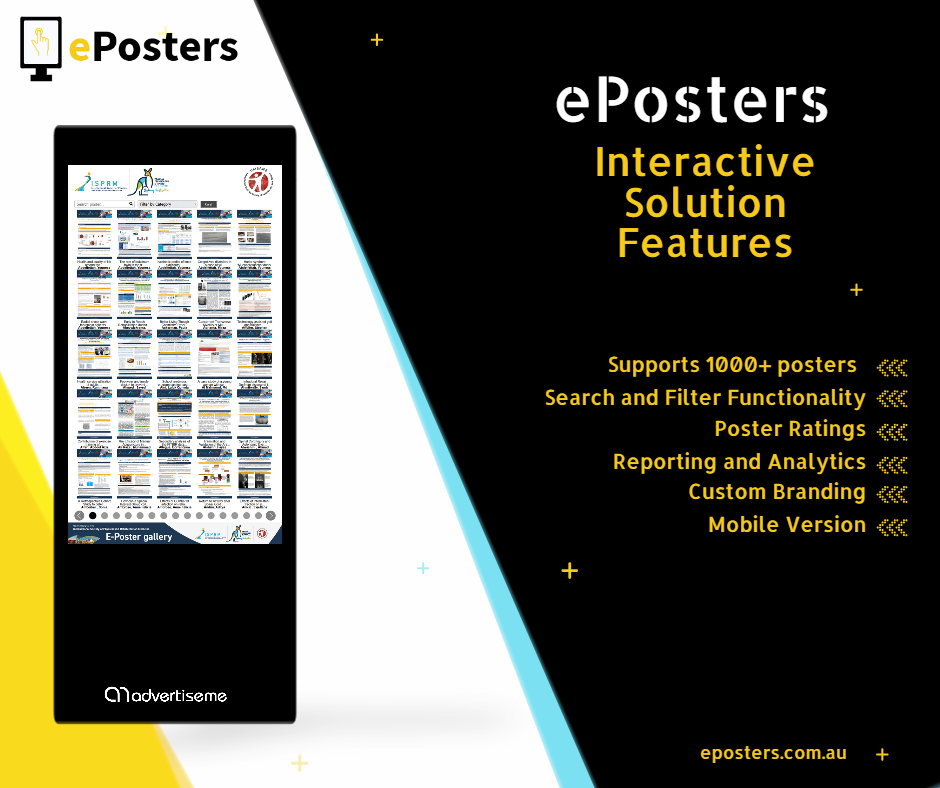
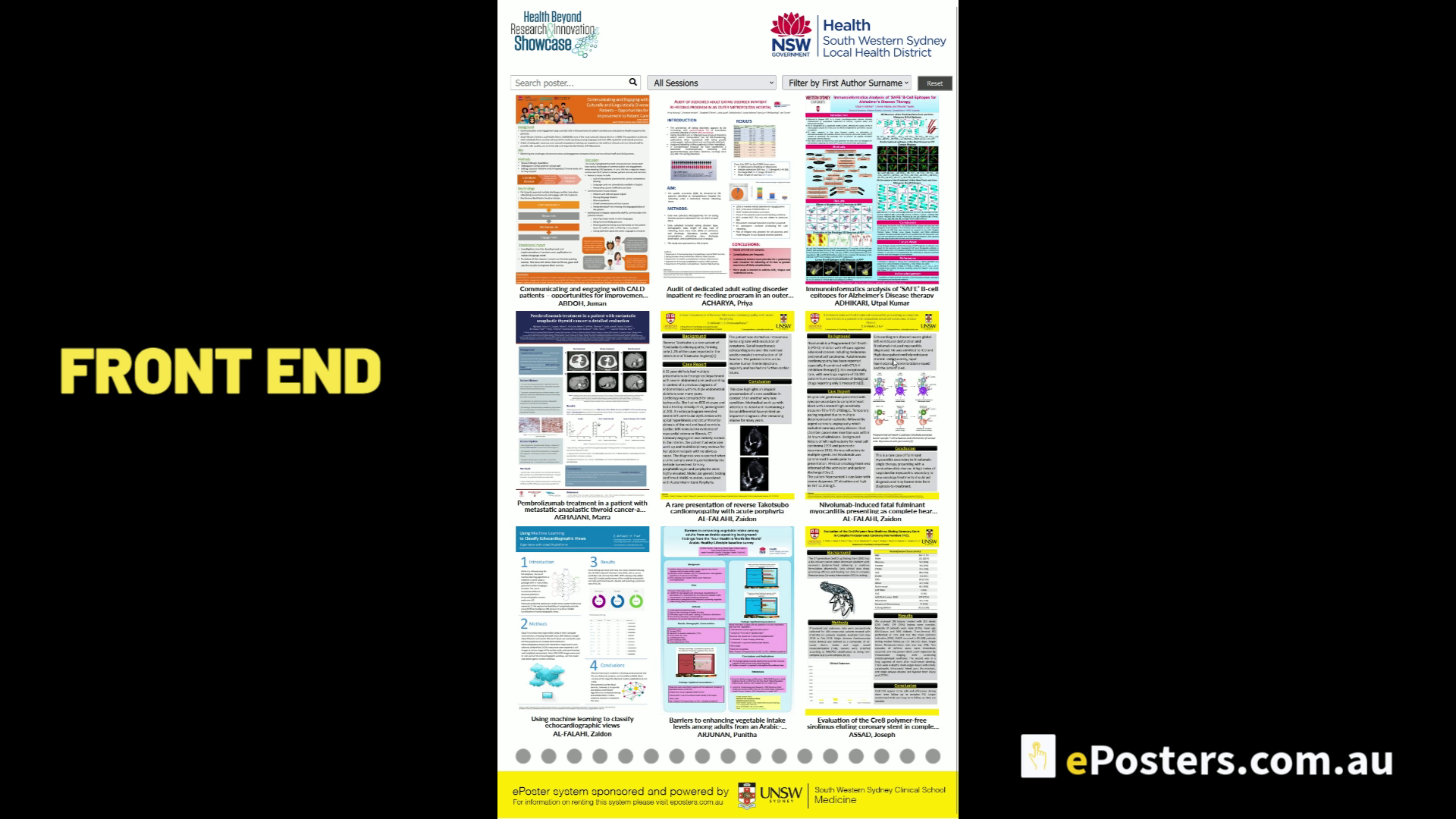
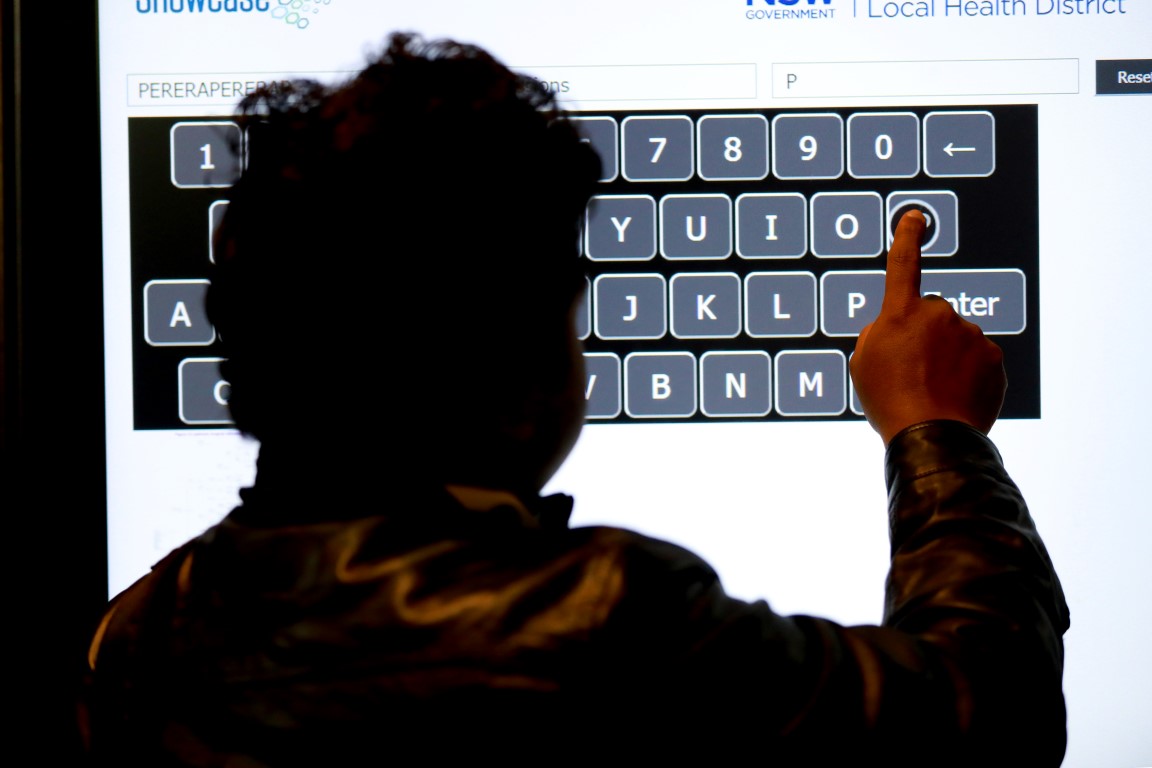
Third, the content is displayed through digital interactive kiosks at the event. Attendees can browse posters on site in a clean and accessible environment, and depending on the event setup they may be able to search, select, and view specific posters more efficiently than walking down long rows of printed boards. This helps the poster session feel less chaotic and more intentional.
What makes this easy in practice is the fact that the same system brings together submission, organisation, and presentation. Instead of separate tools for collecting files, managing poster lists, and displaying content, our ePosters approach creates a smoother end to end workflow.
Getting presenters ready before the event
One of the simplest ways to make any digital poster event run well is to start with clear presenter instructions. Even the best display system works better when presenters know what file formats to use, what dimensions are preferred, how their content will be shown, and what deadline they need to meet. The good news is that digital submission is generally much easier for presenters than printing and transporting a physical poster, so the preparation stage usually feels less stressful once expectations are clear. If you’ve been designing using A0 size, you’ll have no issues as that’s the same size our digital posters are displayed. Our solution also has some smart features and will display other formats as well.
For many conferences, presenters already have a poster drafted in PowerPoint, PDF, Canva, or another design tool. The organiser can provide guidance on how to export that content into a compatible format for the ePosters system. In most cases, keeping the design clear, readable, and visually balanced is more important than overloading it with too much text. Since viewers may be interacting with the poster on screen, readability matters even more than it does on a physical board.
It also helps to encourage presenters to review their content with digital viewing in mind. Text should be large enough to read comfortably, charts should be clear, and visual hierarchy should guide the viewer from title to methods, findings, and outcomes without confusion. If the system allows more interactive or multi page content, presenters can also think beyond the limitations of a single page and create something that is easier to explore in sections.
From an organiser perspective, this stage is where the ePosters system can reduce administrative friction. Instead of manually chasing printed poster confirmations and dealing with on site mounting concerns, the organiser can focus on content readiness and display planning. That shift saves effort and creates a more reliable process before the event even begins.
Displaying digital posters on site at conferences and events
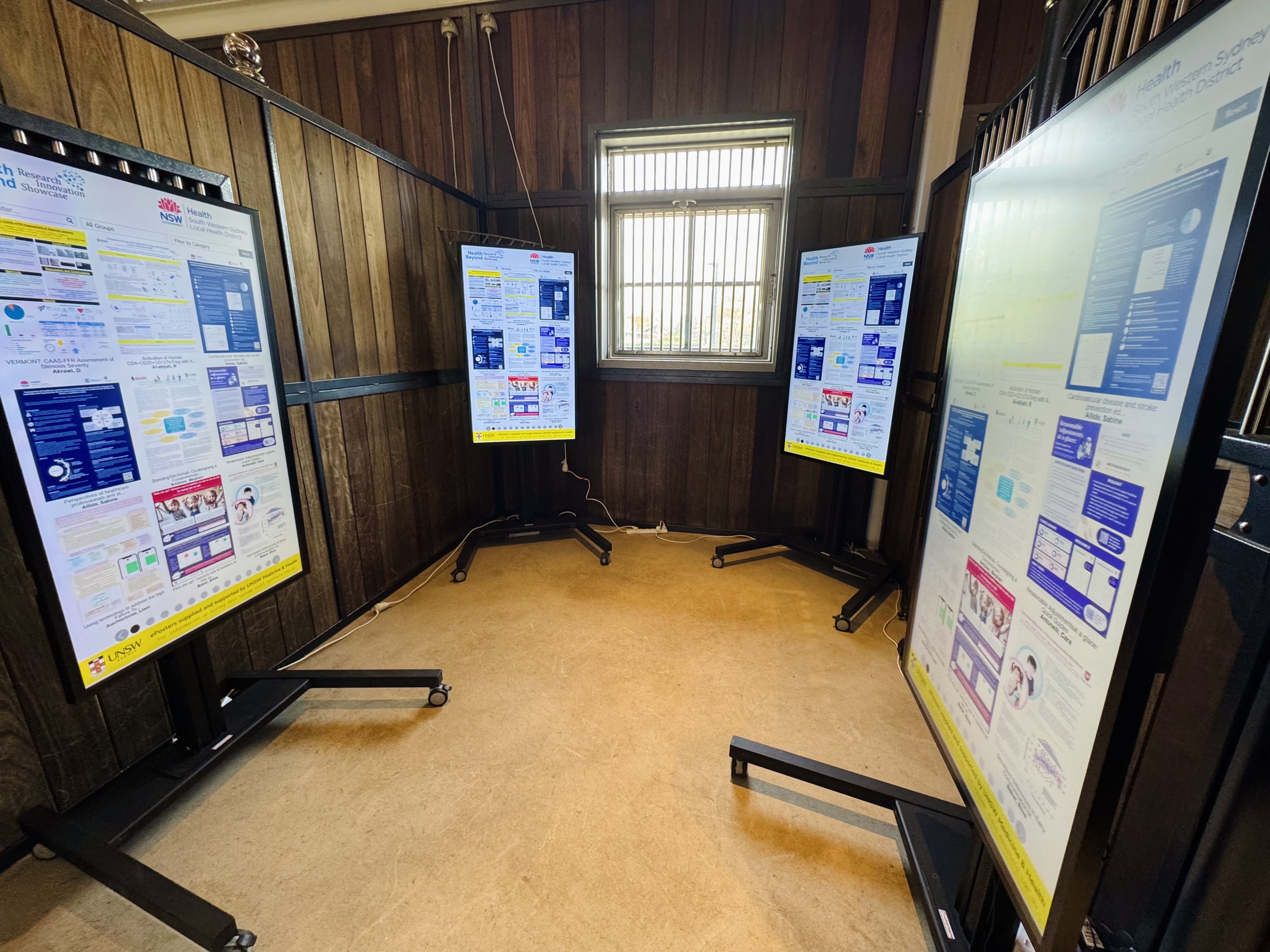
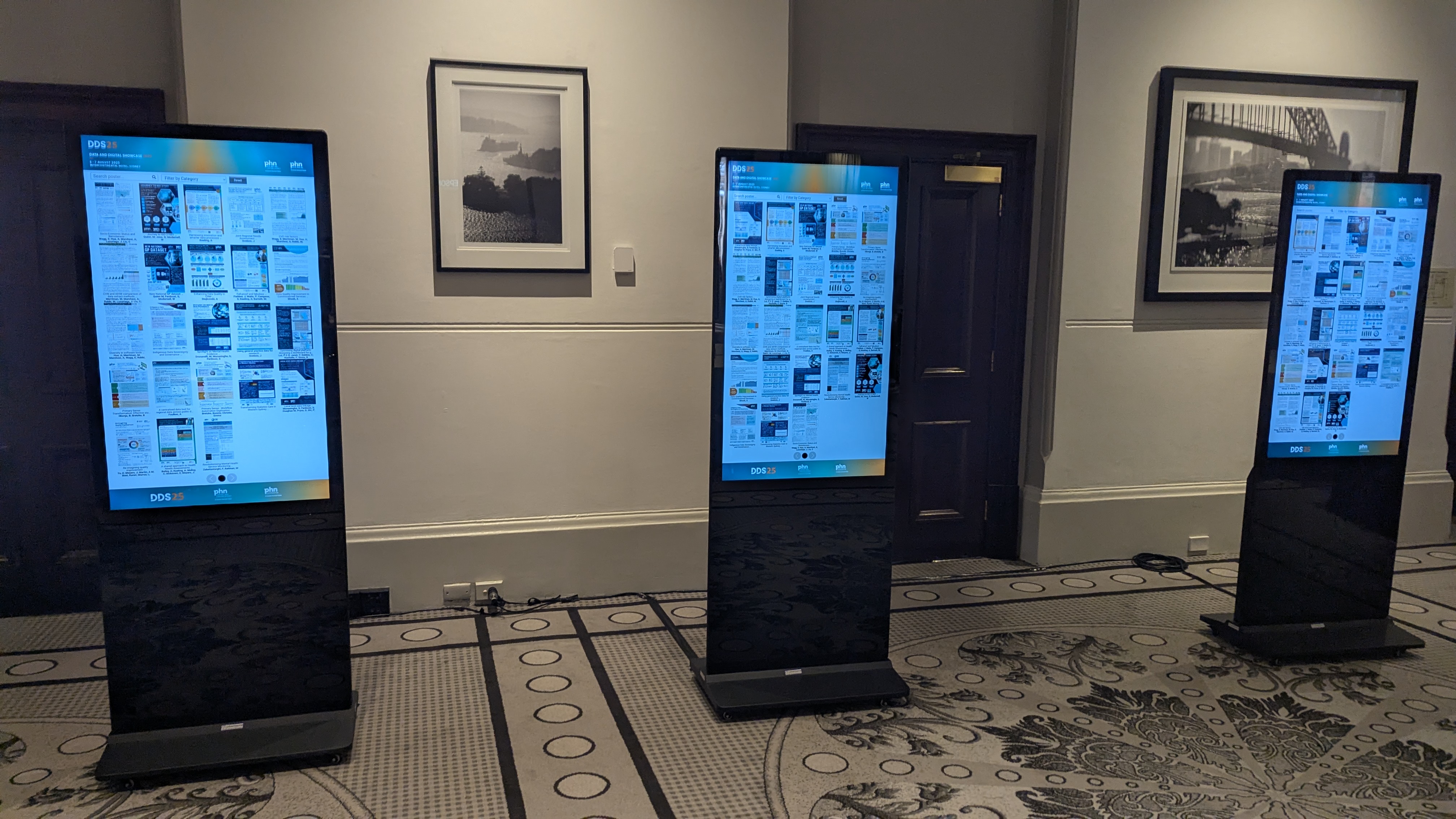
The on site experience is where the value of the ePosters system becomes most visible. Instead of seeing long walls lined with printed boards, attendees can engage with content on professional digital displays that feel more in line with a modern conference environment. This creates a cleaner visual presentation and often uses space much more efficiently, which can be especially useful in venues where floor area is limited or expensive.
Digital posters can be displayed on touch screens kiosks which gives greater flexibility and allows organisers to tailor the display style to the venue, audience size, and type of event. A smaller seminar may only need a few viewing stations, while a larger conference can create a dedicated digital poster zone with multiple screens and searchable poster access. The result is a setup that feels more streamlined and easier to navigate.
Attendees benefit because they can spend less time scanning crowded rows and more time engaging with the content that actually interests them. If the system includes browsing or search features, viewers can find specific topics, authors, or subject categories much faster. That is especially useful at academic, medical, and industry conferences where poster sessions can include a large number of specialised subjects.
For presenters, digital display can also improve the quality of interaction. Rather than standing beside a printed poster that may be difficult to read from a distance, they can walk attendees through content on screen in a more dynamic way. This can lead to better conversations, clearer explanations, and a more professional presentation experience.
Making the viewing experience better for attendees
A good poster session is not just about displaying information, because it is also about helping people discover relevant ideas quickly and engage with them comfortably. This is where digital poster systems can outperform traditional setups in a very practical way. Physical posters depend heavily on where someone happens to walk and how much time they have to stop, but digital systems can support a more guided and searchable viewing experience.
With the ePosters system, attendees may be able to browse by category, presenter, topic, or session depending on how the event has been configured. That simple improvement can make a large conference feel far more accessible. Instead of missing valuable presentations because they were placed in a busy corner or because the room was too crowded, attendees can locate the content they want in a more deliberate way.
Screen based viewing also supports clarity. Posters can often be viewed at a more readable scale, and if zooming or page navigation is available, the attendee is not forced to lean in awkwardly to read fine print. This makes the overall poster area more inclusive for a wider range of viewers and can improve the quality of attention each poster receives.
Another important point is that digital displays often create a more contemporary impression of the event itself. For conferences that want to present themselves as innovative, organised, and forward thinking, the use of digital posters aligns well with that message. It shows that the event is using technology in a practical way rather than simply following older formats out of habit.
Why organisers often find this easier to manage
From the organiser side, one of the biggest hidden costs of printed poster sessions is not just the boards or the venue space, but the administration wrapped around the process. There are instructions to send, specifications to explain, questions to answer, posters to place, mounting materials to organise, damaged prints to deal with, and end of day removal to supervise. Much of this work disappears or becomes far simpler when digital display is built into the event plan from the start.
The ePosters system gives organisers a more controlled environment for managing poster content. Submission deadlines can be set clearly, files can be gathered in one location, poster information can be standardised, and the final display can be prepared without the logistical mess of physical handling. This saves time before the event, reduces setup pressure on the day, and can lower the chances of something going wrong during the session.
It also supports consistency. When every poster is displayed through the same digital system, the presentation format feels more uniform and professional. That creates a better visual standard across the event and avoids the uneven appearance that sometimes happens with printed posters using different paper quality, colour output, and mounting condition.
For venues and sponsors, this can also be attractive because the event space looks tidier and more premium. Screens, kiosks, and digital browsing stations can be arranged in a way that feels deliberate and polished, which contributes to the overall quality of the conference experience.
Simple tips for getting the best results with ePosters
If you want the easiest and smoothest experience when using the eposters system, there are a few practical habits that make a real difference. The first is to set clear specifications early. Presenters should know the preferred file type, orientation, resolution, and submission date well in advance. This avoids confusion and helps maintain quality across the event. We provide this information for you.
The second is to test the poster display setup before attendees arrive. We test all the posters on the interactive kiosks at least a few days before the event. Even though digital systems reduce many traditional poster problems, it is still important to confirm that screens are working properly, files are loading correctly, and navigation is clear. A short pre event test can prevent avoidable issues and gives organisers confidence that everything is ready.
The third is to think about the attendee journey rather than just the technology. Ask how people will discover posters, how they will browse them, whether presenters will be available at scheduled times, and how the poster area fits into the wider conference flow. The best digital poster setup is one that feels intuitive, not one that simply looks modern.
It is also worth encouraging presenters to design for clarity instead of trying to fit everything onto one crowded layout. A digital poster can still become hard to read if the design is too dense. Strong titles, clean sections, readable text, and sharp visuals usually perform better than overcomplicated layouts. In many cases, simpler design creates better engagement.
A more practical way to run poster sessions
When you look at the full picture, the appeal of the ePosters system is not just that it replaces paper with screens, but that it makes the whole poster process easier from start to finish. Presenters no longer need to worry about printing, carrying, and mounting oversized posters. Organisers can collect and manage content more efficiently. Attendees can browse posters more comfortably and find the topics most relevant to them. The event itself benefits from a cleaner, more professional presentation style that fits the expectations of modern conferences.
For organisations running academic meetings, medical congresses, trade events, internal showcases, or professional conferences, this can be a very practical upgrade. It improves flexibility, reduces physical logistics, and supports a better user experience for everyone involved. That is why digital poster systems are becoming a more attractive option for events that want to work smarter without making the process harder.
If the goal is to find the easiest way to display digital posters at events and conferences, using our ePosters system is a straightforward answer because it simplifies submission, improves presentation, and creates a better viewing environment overall. For any event looking to move beyond the limitations of printed posters, it offers a cleaner and more efficient way to bring poster sessions into a format that feels ready for how conferences operate today.